
What is CFD Trading and How Does It Work? Online CFD Trading
This can be done with the help of technical analysis tools built into the trading terminal. NordFX also offers a calendar of macroeconomic events and analytical reviews, which will make it easier for you to make key decisions on trading CFD contracts. In fact, CFD contracts resemble a bet that a trader makes with a broker as to whether the price of an asset will rise or fall.
What is the difference between CFD trading and buying stocks?
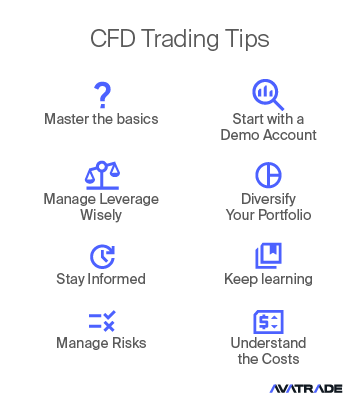
CFD trading involves spreads, commissions, and overnight fees. Being aware of these costs ensures you can accurately calculate potential profits and losses. For instance, if you are looking for slow and steady growth, asset classes with higher volatility should form a proportionally small part of your portfolio. While diversification can help balance risk across asset classes, it’s important to manage the number of open positions carefully to avoid negatively impacting your margin level.
Trade Forex, commodities, indices, and shares through CMS Prime’s integrated ecosystem. Trading with leverage means traders only need to put up an initial margin requirement to open a position, which is a pre-defined proportion of the full value of the trade. Trading on margin amplifies potential profits and losses equally, so it’s important to understand and manage your risk. CFD trading allows you to access global markets around the clock. There are no prohibitions against shorting, and brokers offer many of the same professional services as with other types of trading but without the fees and without day trading requirements. Using CFDs also allows you to trade across stock, index, currency, commodity, and even more markets, allowing you to pursue a diverse portfolio.
What is CFD trading?
CFD trading covers a broad range of assets like stocks and commodities, while forex trading focuses exclusively on currency pairs. Yes, but it requires discipline and might come with extra fees. First, always include swap or funding rates in your calculations; this ensures overnight financing is factored into your expectations.
These examples illustrate how contracts for difference enable you to benefit from both rising and declining markets, while also demonstrating how leverage can magnify both gains and losses. Trading contracts for difference attracts a wide variety of participants, from individual traders to large financial institutions, each utilizing these instruments for different reasons. You can trade CFDs on over 17,000 markets with us, including indices, shares, forex, cryptos, commodities and more. If the index moves against you and you decide to close your position, you’d make a loss. The spread is the difference between the bid and ask prices, and varies depending on market conditions. In most cases we charge our own spread on top of the market spread, as our fee for the trade.
How do you hedge an existing portfolio with CFD trading?
For instance, if you anticipate a rise in oil prices, you place a buy order. A hedge is a risk management technique used to reduce losses. You hedge to protect your profits or capital, especially in times of uncertainty.
A number of assets are more commonly priced in the futures market and oil is a great example of this. CFD (contract for difference) is an agreement signed between two parties and allows to trade on the difference https://techbullion.com/everestex-review-platform-features-for-digital-asset-traders/ between the opening price and closing price of a contract. In order to start trading CFDs, you’ll need some capital to secure your positions.
Trading CFD: How These Contracts Work
Because CFDs use leverage, traders can open positions with relatively small deposits. However, traders should only use funds they can afford to risk and should maintain sufficient margin to manage market fluctuations. CFD prices track the prices of the underlying assets, meaning if the price of gold rises, the CFD price will mirror this movement. This ensures that your trades stay in sync with real market conditions, allowing for an accurate trading experience.
Example of a losing trade
- In essence, it’s an agreement between you and your broker to exchange the difference in an asset’s price movements from the start to the end of the trade.
- It can be hypothetical or quite real in the form of step-by-step instructions.
- This can increase potential profits but also increases risk if the market moves against you.
- In this case, you would make a profit of $5, which is the difference between the buying price ($10) and the selling price ($15).
- That is, the investor for the purchase of CFD-contract is not obliged to pay the full amount of the trade.
- Also, contracts for difference are a very cheap way to buy stocks of companies that the investor does not have enough funds to buy.
Platforms like Goat Funded Trader provide simulated prop-trading programs and funded demo accounts with up to $2M in simulated capital and on-demand profit payouts. This helps traders practice strict risk limits, try out strategies, and scale position sizing without using their own capital. This essentially means you are speculating on the price movement of the asset without actually owning it. CFDs on Forex provide access to contracts for difference trades without having to register trading accounts on various exchanges. Forex brokers provide an opportunity to make trades in various instruments using just one trading account.

Why do people trade CFDs?
CFDs mirror the price of the underlying asset, enabling you to profit from both rising and falling prices. You can place trades based on your market outlook – buying (going long) when you expect a rise in price and selling (going short) when you foresee a fall. CFD traders speculate on whether asset prices will rise or fall.
Short (Selling):
Day trading and swing trading strategies aim to capture smaller price fluctuations over hours or days rather than years. CFD trading provides flexibility and access to many markets. This makes it easier for traders to diversify their strategies and explore different opportunities. You should carefully consider whether trading is appropriate for you based on your personal circumstances, including your financial resources, investment experience, and risk tolerance. This dual-direction trading makes CFDs especially attractive in volatile markets, such as CURRENCY, where prices can fluctuate significantly.
This strategy necessitates patience, discipline, and a profound comprehension of market dynamics. While immediate profits may be less frequent, position trading can be a prudent approach for investors seeking to build wealth over an extended timeframe. Without the leverage that your broker provides you, trading on the exchange for individuals would be unprofitable both for a trader and a broker. However, it’s crucial to underline that it’s possible to lose money when trading CFDs with leverage. It’s a tricky instrument that, on the one hand, helps you to increase your returns, but, on the other hand, could make your retail investor accounts lose money. CFD trading has a lot of advantages over traditional trading.
Example of going Short
The profit or loss is determined by the difference between the opening and closing prices of the CFD. In the late 90s, a boom in tech companies began and contracts for difference changed significantly. Gerard and Intercommodities became the first financial services company to offer its clients stocks CFD trading via the Internet on the special GNI Touch platform. This is how the first prototype of the modern Forex market appeared. And the financial services company decided to offer its clients to trade not the stocks themselves, but to buy and sell a contract for the difference in the current market price of this stock.
Go long and short
However, as time went on, I found obvious disadvantages as well. The principle is to open a position in the direction of a newly formed trend. You find the trend formation point based on the main signal from the intersection of the fast (21 periods) and slow (55 periods) moving averages.